
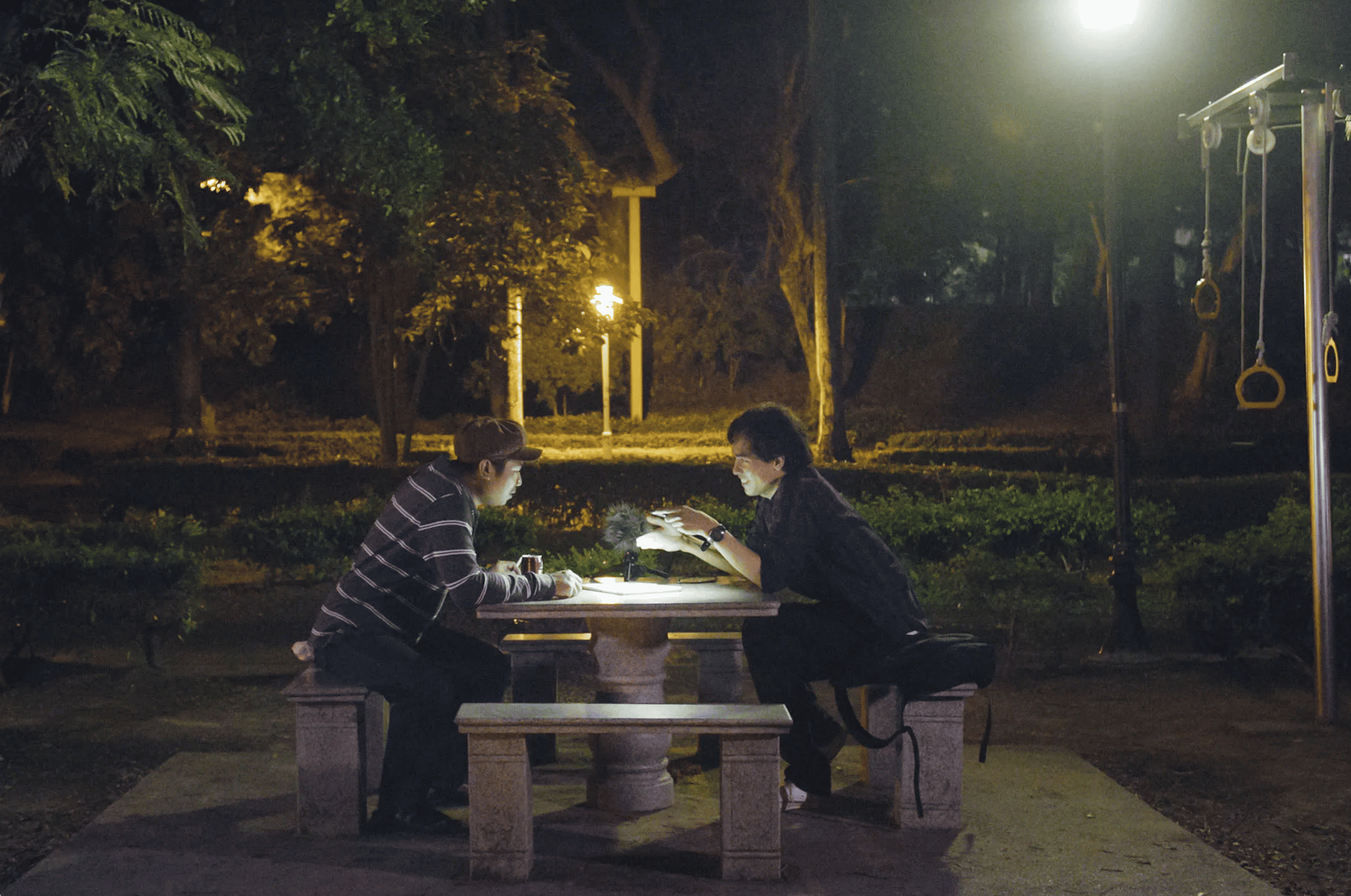
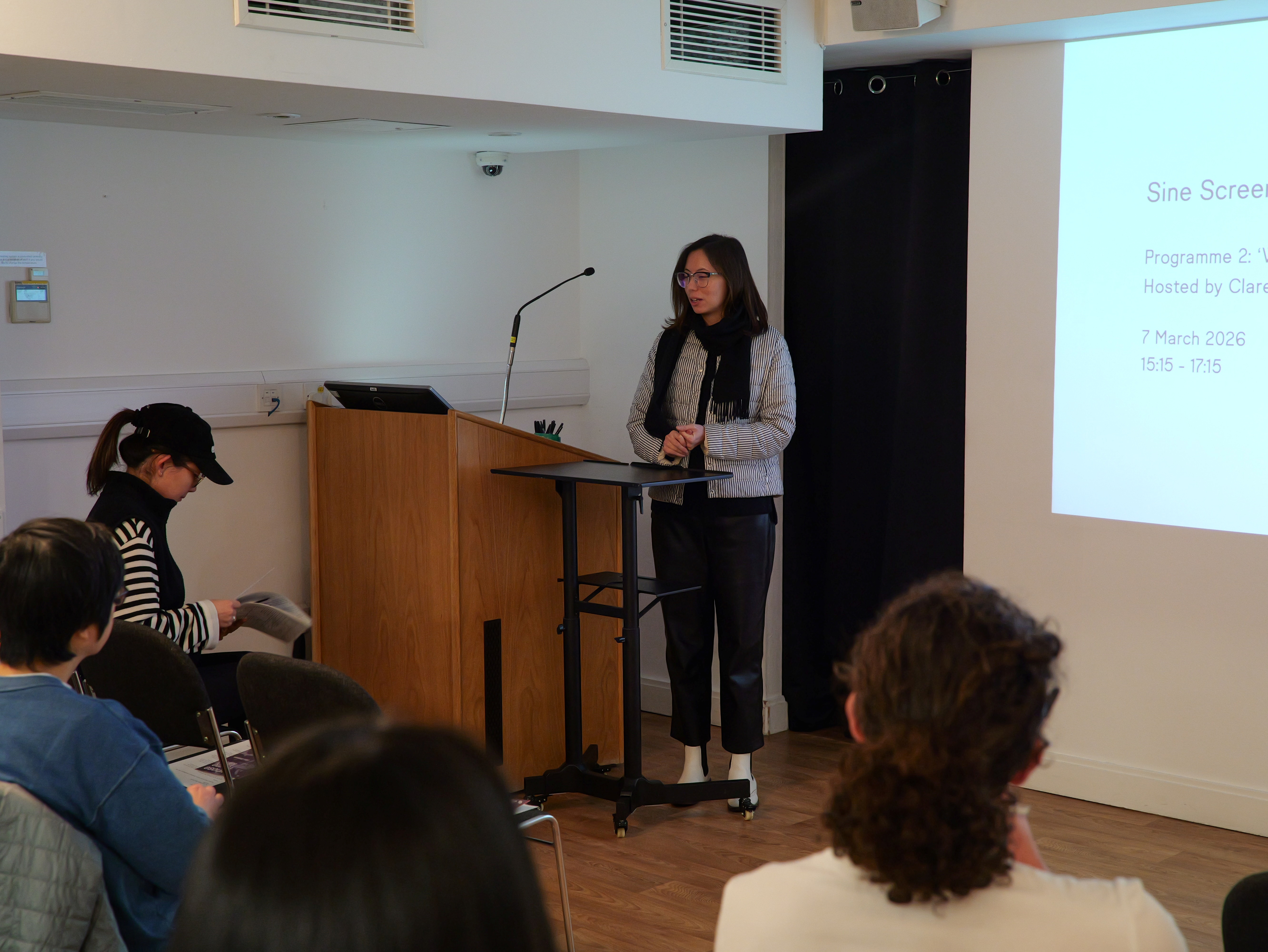
Across two screening programmes, Whose Homeland considers migration, labour, and return as lived, embodied processes rather than fixed narratives. Together, the films foreground storytelling, memory, and autoethnography as counter-archival practices — ways of holding histories that exceed official records and national frameworks. Moving between collective imagination and intimate family histories, the programmes ask how ideas of homeland are continuously reshaped through displacement, labour, translation, and acts of remembering. The programmes are guest curated and will be introduced by Clare Chun-yu Liu.
Programme 1: ‘Whose Homeland: Migration, Labour and Storytelling’ (13:00–15:00)
Screening:
So Yo-hen, Taman Tamen, 2024 (100 mins)
This programme centres migrant experience as a form of living archive, foregrounding poetry, play, and collective storytelling as modes of resistance and care.
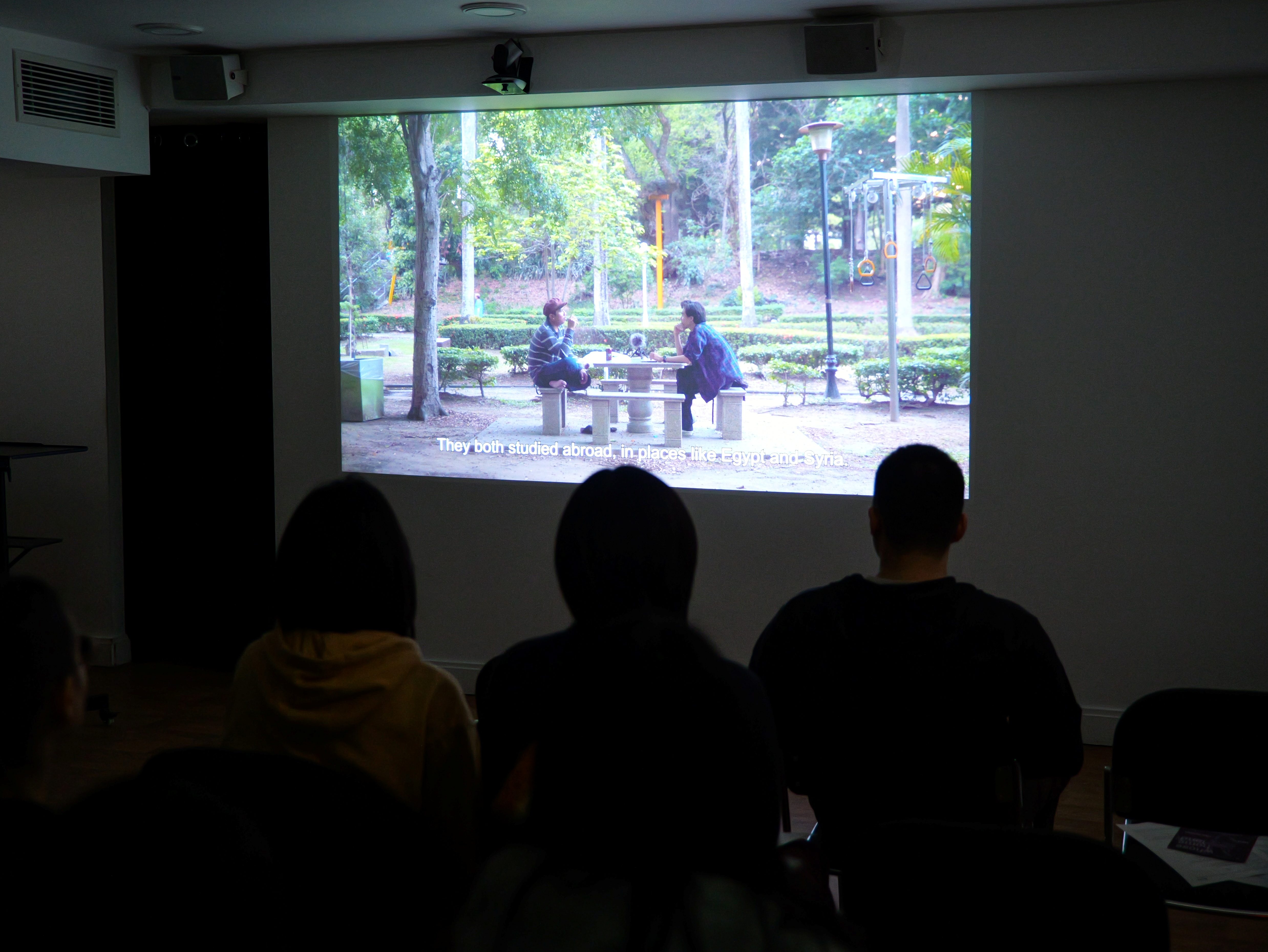
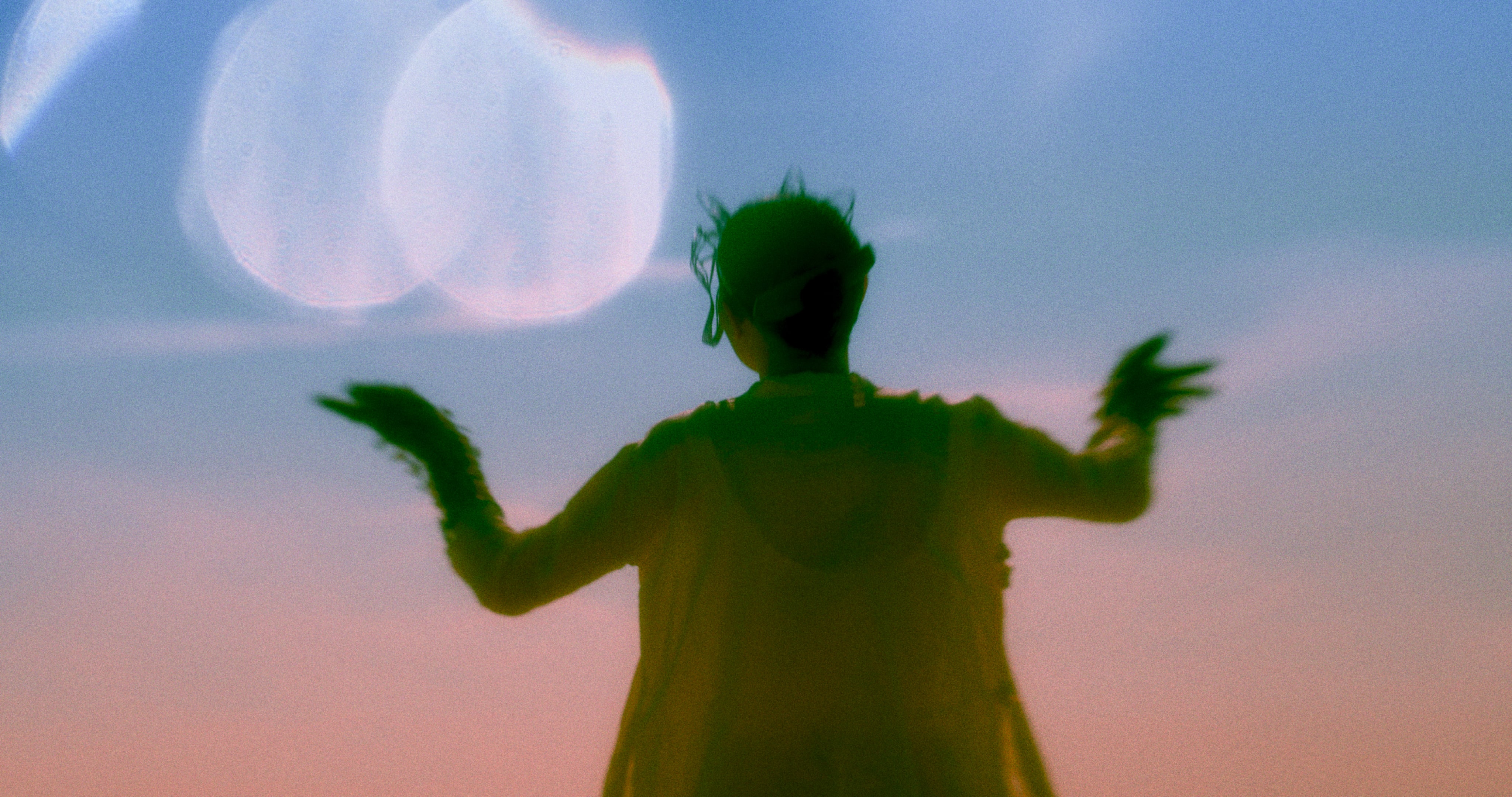
Set within Tainan Park — a long-standing gathering place for migrant workers in Taiwan — Taman Tamen (2024) unfolds through nocturnal encounters between two Indonesian poets who transform the residue of everyday labour into shared reverie. Blurring documentary and fiction, reality and illusion, the park emerges as a space of refuge and invisibility, intimacy and imagination.
Rather than fixing migrant lives within narratives of precarity, the film attends to how voices and bodies reanimate space through storytelling. Humour, role-play, and shifting perspectives disrupt linear narration, proposing imagination as a way to reclaim agency within conditions shaped by displacement.
The film continues Your Bros. Filmmaking Group’s long-term, community-rooted practice, which engages migrant labour through participatory processes and decentralised collaboration. Here, migration is not only documented but re-envisioned — as a site where memory, fantasy, and political reality intersect.



Programme 2: ‘Whose Homeland: Migration, Homecoming and Autoethnography’ (15:15–17:15)
This programme brings together three artist films that reflect on the act of “returning” — to ancestral villages, inherited histories, and imagined homelands — while questioning the possibility of belonging itself.
Through autobiographical and autoethnographic approaches, the films trace diasporic Chinese family histories shaped by migration across Southeast Asia, Europe, the Caribbean, Australia, and beyond. Each work examines how memory is constructed, mediated, and translated across generations, languages, and geographies.
Rather than offering resolution, these journeys expose the fractures embedded in ideas of origin and home. Collectively, the films position homecoming as an ongoing negotiation — shaped by distance, colonial histories, and the instability of images and testimony. By inhabiting uncertainty and multiplicity, the programme offers a counter-archive of diasporic experience grounded in subjectivity and lived experience.
Screenings:
Fiona Tan, May You Live in Interesting Times, 1997 (60 mins)
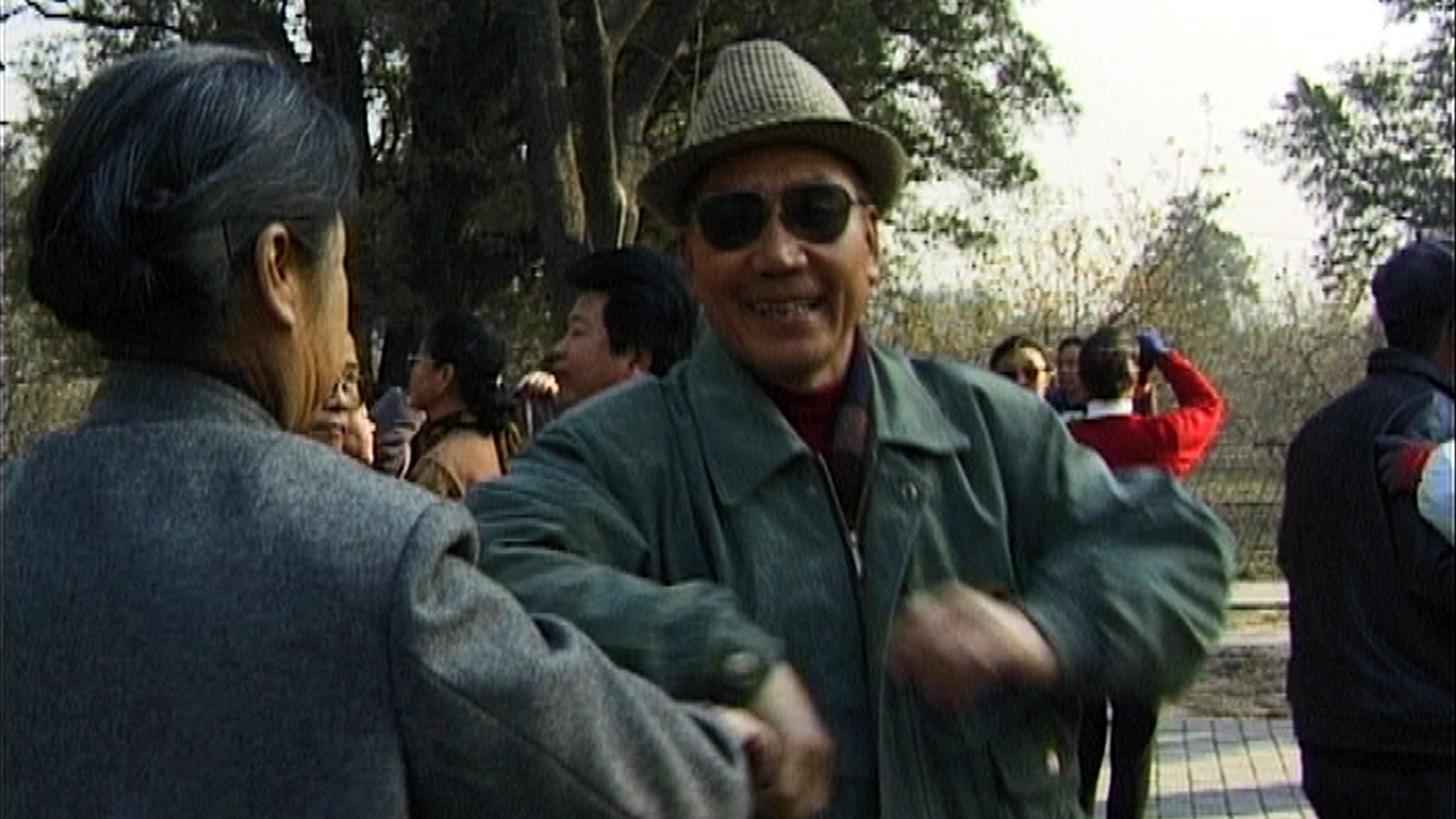
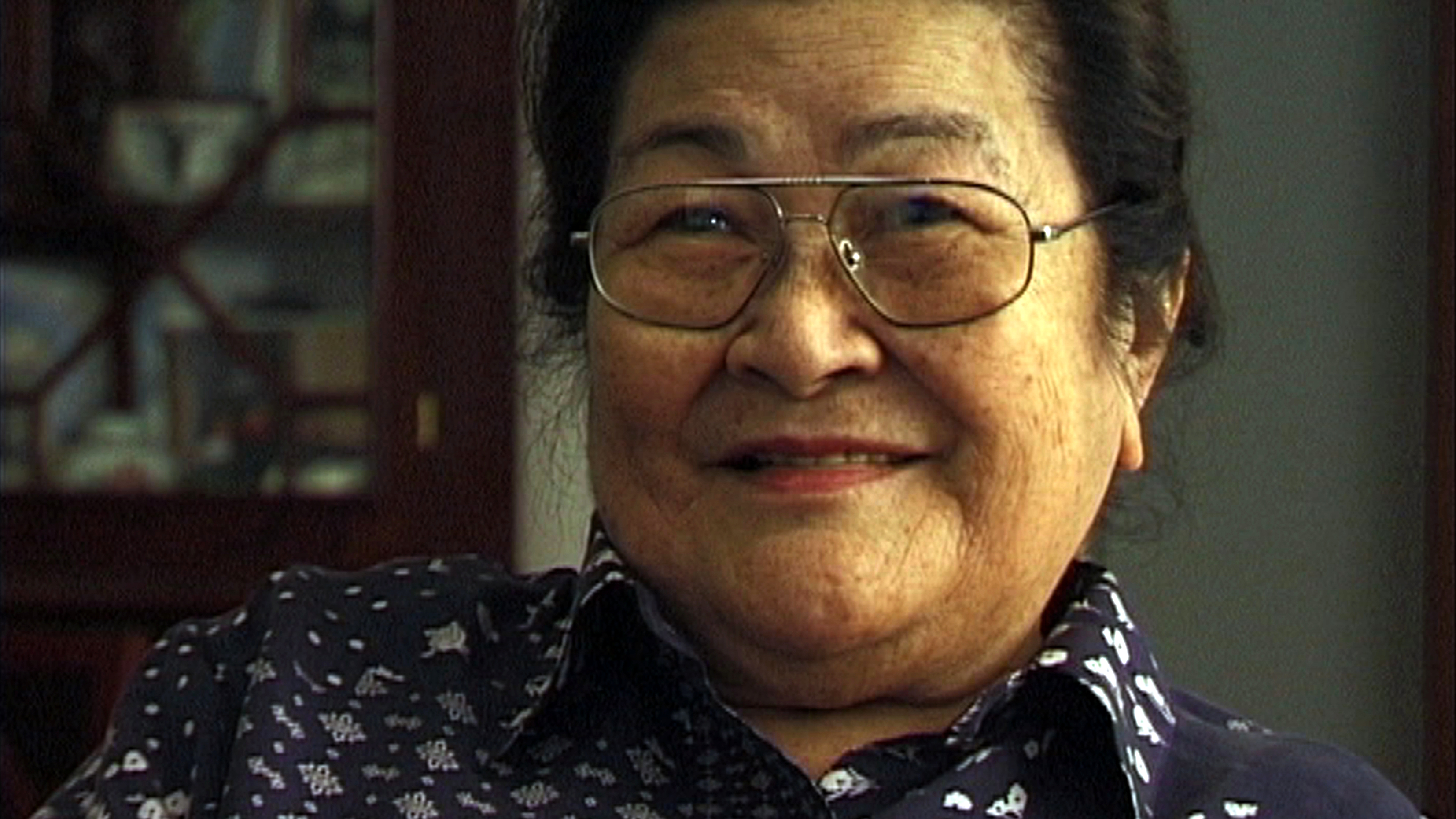
May You Live in Interesting Times (1997) is Fiona Tan’s most autobiographical work, tracing her family history through testimony and travel across Europe, Southeast Asia, and China. Moving between personal reflection and broader diasporic histories, the film examines how identity is shaped — and unsettled — by migration, inheritance, and distance from an ancestral homeland that remains ultimately uninhabitable.
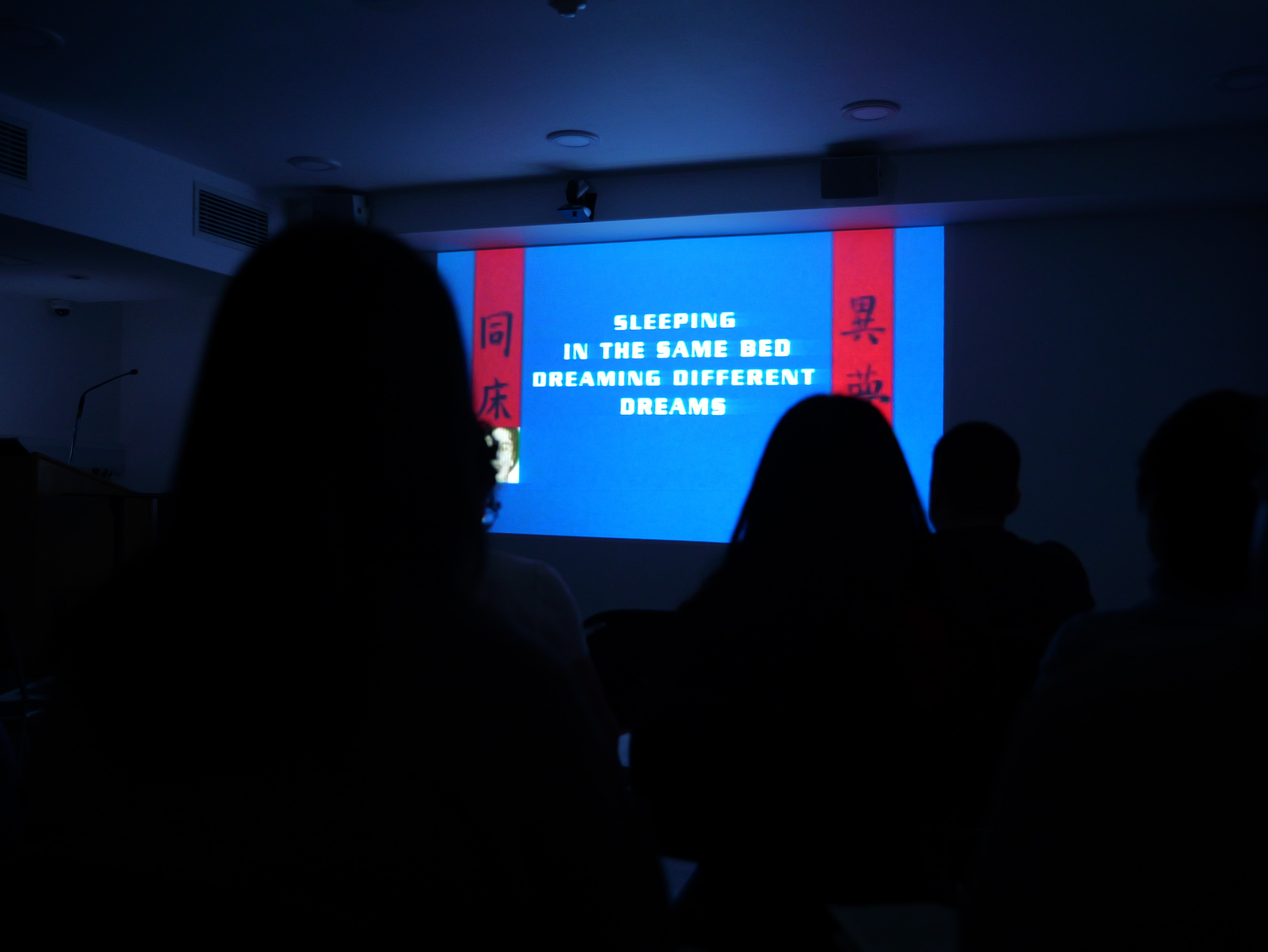
Richard Fung, The Way to My Father’s Village, 1988 (38 mins)
I was born and grew up in Trinidad, on the other side of the world from China. In the fall of 1986 I finally went to my father's village in southern Guangdong. This experimental documentary examines the way that children of immigrants relate to the land of their parents. It is about the construction of history and memory, the experience of colonialism, and about Westerners looking at China. It is the first tape of a two-part series.
Erika Tan, Journeys of Remembrance, 2008 (18 mins)
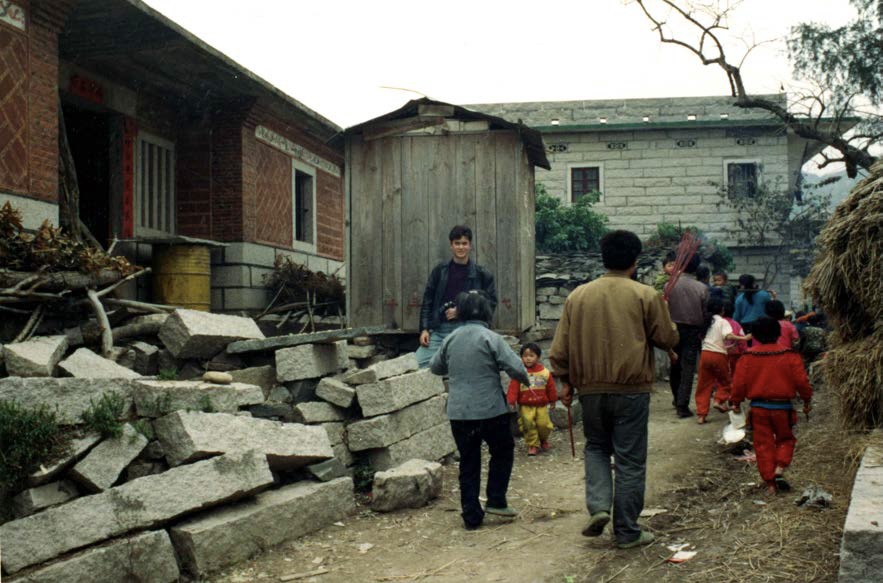
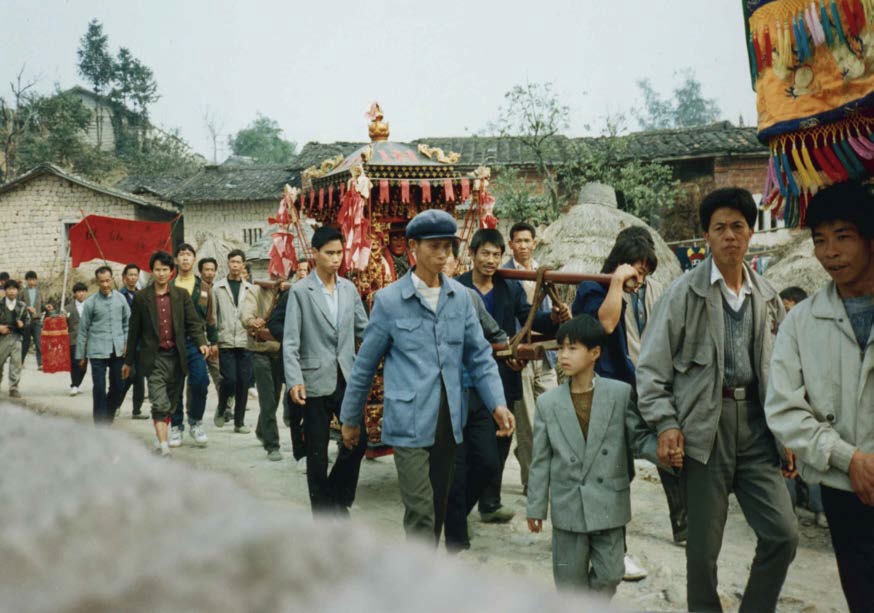
Journeys of Remembrance (2008) revisits photographs taken during a family trip to an ancestral village in Fujian, China, treating images not as records but as sites of shifting interpretation. Through layered voiceovers and multilingual translation, the work exposes memory, authorship, and narration as unstable — shaped by time, language, and the act of re-reading itself.
About Whose Homeland (2025–26)
Whose Homeland is a film season presented by Sine Screen, running from November 2025 to March 2026 across London, with touring events in Bristol, Birmingham, and Manchester. The season explores migration, internal displacement, and marginalised lives, approaching homeland as a concept continually in flux.
With special events sited within diasporic communities—the season also anchors cinema within lived geographies of migration, where questions of homeland are continually reimagined. Presented with the support of the BFI, awarding National Lottery funding.
Advanced booking is required. Please select the programme(s) you wish to attend when booking.
So Yo-hen (b. 1982, Tainan, Taiwan) is a visual artist and filmmaker. Since 2009, his work has addressed underrepresented social histories through experimental and collaborative filmmaking, often employing humour and whimsy as tools of empowerment.
Founded in 2017 by So Yo-hen, architect Tien Zong-yuan, and art historian Liao Hsiu-hui, Your Bros. Filmmaking Group is a collective working closely with migrant communities in Taiwan. Their practice combines field research, participatory workshops, and collective storytelling to examine migrant labour through the politics of space and everyday life.
Fiona Tan is a visual artist and filmmaker whose work explores memory, identity, and the construction of images. She has exhibited internationally at institutions including Tate Modern, Rijksmuseum Amsterdam, Eye Filmmuseum, MAXXI Rome, and Mudam Luxembourg, and represented the Netherlands at the 53rd Venice Biennale.
Richard Fung is an artist and writer born in Trinidad and based in Toronto. His work addresses migration, colonialism, sexuality, racism, and family history. Widely screened and exhibited internationally, Fung is Professor Emeritus in the Faculty of Art at OCAD University.
Erika Tan is an artist whose research-led practice examines contested histories, diasporic memory, and the circulation of images and narratives. Her work has been exhibited internationally, including at Tate Modern, the Diaspora Pavilion (Venice), and the Singapore Biennale. She is Reader in Contemporary Art Practice at Central Saint Martins, University of the Arts London.
Sine Screen is a female-led emerging screening collective dedicated to showcasing independent cinema and moving image works from across East and Southeast Asia. Sine Screen aims to challenge the dominant representations of East and Southeast Asia and to open up discussions through curated programmes of works by and about ESEA people.

%20Courtesy%20of%20the%20artist%2C%20Makeroom%20LA%2C%20Public%20Gallery%2C%20London.jpg)

