

esea contemporary and CNTRFLD.ART are pleased to announce journalist, critic and editor Vivienne Chow as Writer-in-Residence for a new research and publishing project tracing the intersections of migration, language and cultural inheritance through the experiences of artists and cultural practitioners connected to Cantonese-speaking communities in the UK.
Developed between August and November 2026, the residency examines the multiplicity of East and Southeast Asian experiences through the lens of Cantonese language, culture and migration. Through a series of conversations with artists and cultural practitioners from different generations and backgrounds, the project considers how histories of migration, colonialism and cultural transmission continue to shape contemporary artistic practice and experiences of belonging in the UK.
The residency begins from a deceptively simple question: what does it mean to be of Cantonese heritage in Britain today?
While Cantonese-speaking communities have long formed part of Britain's social and cultural fabric, their histories often remain marginal to mainstream narratives of British life. Aiming to bring together voices connected to East and Southeast Asia and the wider Cantonese-speaking world, the residency creates space for conversations that move beyond fixed notions of diaspora, foregrounding instead the layered histories, affiliations and identities that emerge through migration.
Central to the project is an exploration of how language, migration and lived experience shape artistic and cultural production. The residency will trace the varied routes through which Cantonese-speaking communities arrived in Britain, from colonial Hong Kong and post-war migration networks to the movement of ethnic Chinese communities across Southeast Asia. In doing so, it considers how the histories and afterlives of British colonialism in East and Southeast Asia continue to inform questions of identity, mobility and cultural belonging in the present.
Through writing, conversation and audiovisual forms, the project also reflects on the role of storytelling itself. At a moment when artificial intelligence is rapidly reshaping media and cultural production, the residency foregrounds dialogue, interpretation and lived experience, recognising the unique value of knowledge that emerges through human encounter, memory and exchange.
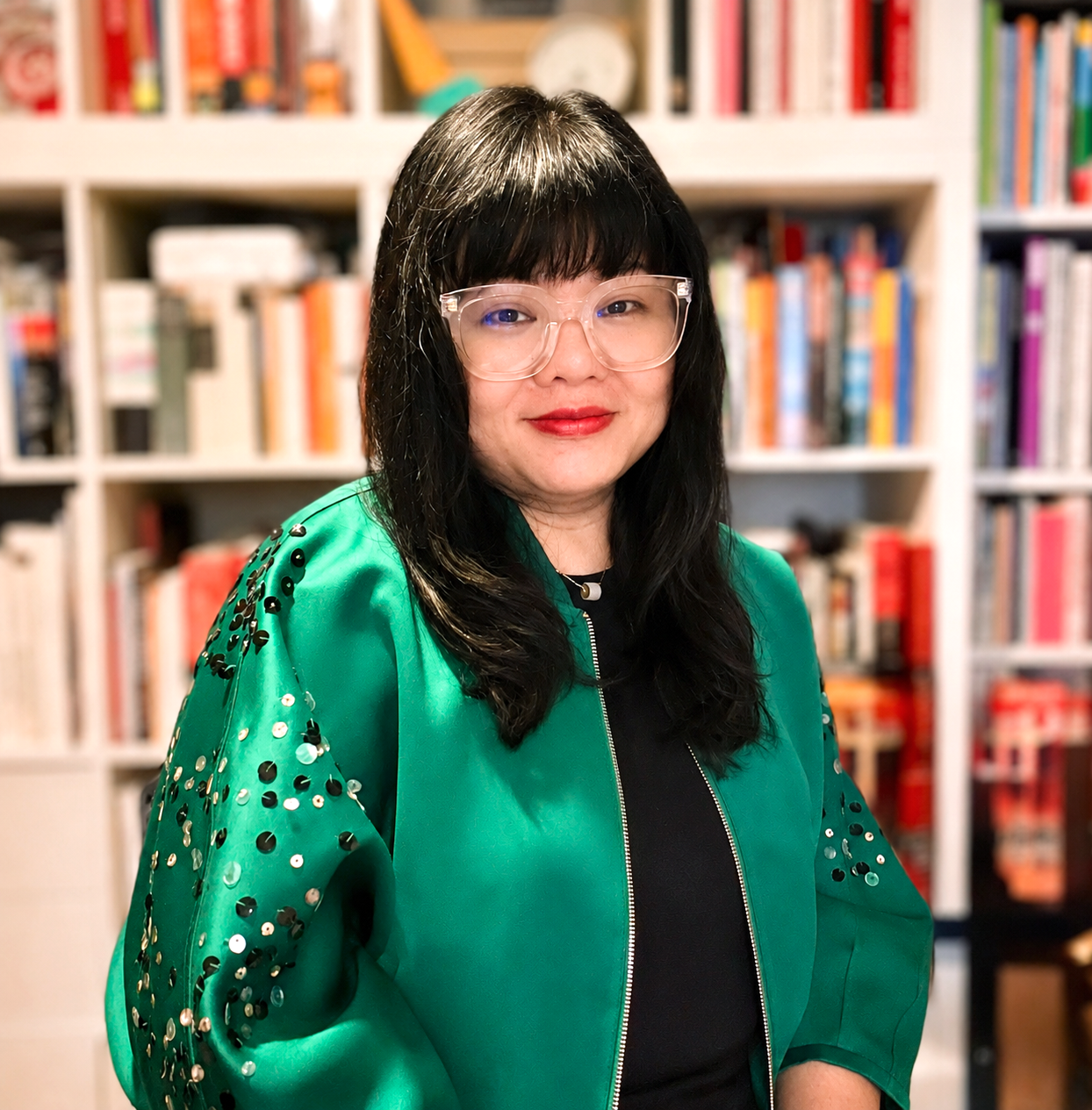
Vivienne Chow is an award-winning journalist, writer and a content strategist whose work examines art, cultural ecosystems and identity at the nexus of East and West. Through her reporting and analysis, she aims to break down cultural barriers, uncover untold stories, and foster dialogue among art-world players from diverse backgrounds. She is a Salzburg Global Fellow and an IJP Premium Fellow, and is Writer-in-Residence at esea contemporary from August to November 2026.
Over more than two decades, she has built an internationally recognised career spanning Asia and Europe, served as Senior Reporter at the South China Morning Post, and London Correspondent at Artnet News, where she co-founded The Asia Pivot newsletter. Her byline has appeared in BBC Culture, Variety, The Art Newspaper, the Financial Times, and the New York Times, among others.
Beyond journalism, she founded the non-profit Cultural Journalism Campus and has taught arts writing and reporting at universities. She was the editor of A New Reality, the monograph of Hong Kong artist Stephen Wong Chun Hei. She also advises cultural organisations on strategy and research, and is a regular speaker and moderator at international art and cultural forums.
CNTRFLD.ART is an independent charitable educational and research archive dedicated to documenting and advancing the cultural practices and histories of East and Southeast Asian (ESEA) artists and their diasporas. Operating as a living archive, it brings together publishing, research, and community documentation to address gaps in representation within contemporary art. Through interviews, essays, visual works, and open-access research, CNTRFLD.ART supports artists, researchers, and independent practitioners while fostering critical dialogue across geographies, disciplines, and generations. Rather than functioning as a traditional institution, it provides an evolving platform that records the contexts, conversations, and histories shaping ESEA artistic practice, contributing to a more inclusive and enduring cultural record.