From Island to Mountain Town: How Art Practices Change with Place
Following the online conversation From Island to Mountain Town, Xiaowen Zhu and Binghuang Xu revisit four contemporary art organisations working beyond China’s metropolitan centres: Kindergarten Without Walls in Hainan, Ergao Dance Production Group in Guangdong, Baopu·FELT in Guizhou, and the Art Museum of Pond Loach in Zhejiang.
Rather than treating these organisations as peripheral alternatives to established cultural institutions, they consider how each has developed its own ways of working through sustained encounters with particular places, communities and local structures. Moving from an island to a village, from Southwest China to a mountain county town, the conversation asks what happens when artistic practice is shaped not by a predetermined institutional model, but through ongoing processes of response, adjustment and reinvention.
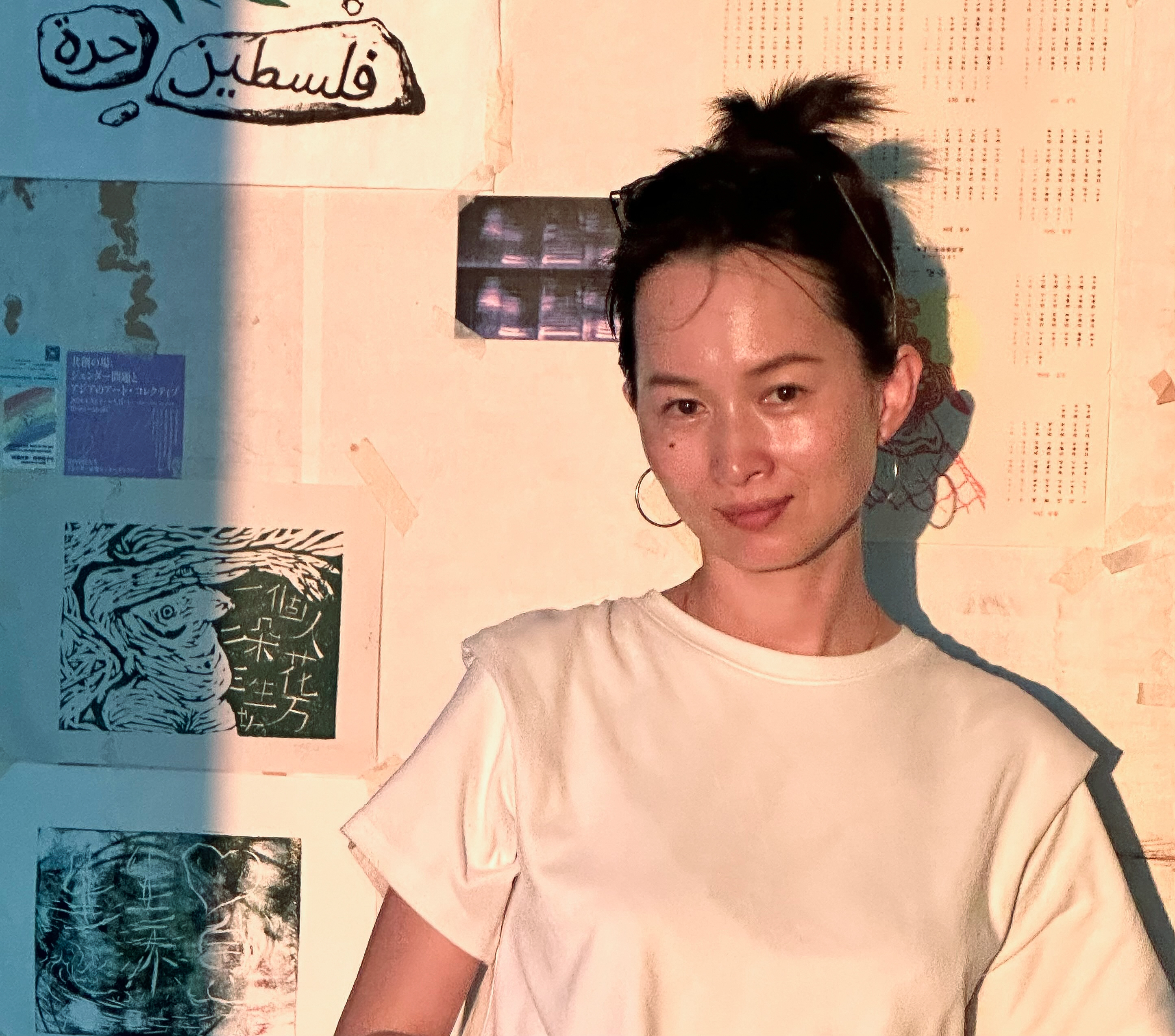
Xiaowen Zhu is Director of esea contemporary and an author based between Manchester and Berlin.
Binghuang Xu is a curator, writer, and researcher based in Guangzhou, China, where she co-runs Making Space.
Conversation: Xiaowen Zhu × Binghuang Xu
Xiaowen Zhu is Director of esea contemporary and an author based between Manchester and Berlin.
Binghuang Xu is a curator, writer, and researcher based in Guangzhou, China, where she co-runs Making Space.
Xiaowen Zhu: When you conceived From Island to Mountain Town as a talk, you were interested in bringing together four organisations working across very different local contexts in China: Kindergarten Without Walls (KWWs) in Hainan, Ergao Dance Production Group (EDPG) in Guangdong, Baopu·FELT in Guizhou, and the Art Museum of Pond Loach (AMPL) in Zhejiang. After our conversation, I kept returning to the phrase ‘turning point’. Each organisation seemed to have reached a moment when its way of working had to change in response to its surroundings.
How did you come to understand the four organisations through the process of putting the talk together?
Binghuang Xu: What struck me most was that none of these organisations began with a fully formed institutional model. Their ways of working emerged through encounters with particular places, people and circumstances. The differences between them are significant: a grocery shop in an urban village, a dance organisation moving from the city into a village, an experimental lab working with local knowledge in Southwest China, and a contemporary art museum in a county town. Yet they share a willingness to adjust their methods rather than impose a predetermined model of what an art organisation should be.
This is why I became interested in the idea of a ‘turn’. It is not necessarily a dramatic break. Sometimes it is a gradual shift in what an organisation understands itself to be.
Xiaowen: Let’s begin with KWWs, because its origins are particularly striking. It began with Banban Grocery, a small shop in Binlian Xincun in Hainan, and changed through the repeated arrival of children. In a sense, the organisation did not begin by deciding what kind of art institution it wanted to become. It began by responding to who was actually there.
Binghuang: KWWs was initiated by Haoduo Tang, and the arrival of a child named Moon at Banban Grocery in 2018 became an important moment. The question was not simply how to make an art project for children, but whether an ordinary shop could become somewhere children could return to, stay, express themselves and build relationships.
That question gradually expanded into a much wider practice. The Yue Liang Education Programme, Oral Poems by the Children, the Children’s Art Festival and Hainan Wallless Art Gongqi all grew from this initial encounter.
What interests me is the way the organisation keeps changing the function of the place. A grocery shop becomes a space for children; that space becomes connected to artists, families, neighbours and practitioners from elsewhere. The organisation grows through these relationships.
Xiaowen: So the ‘turn’ here is perhaps not from one institutional model to another, but from one function of a place to another.
Binghuang: Exactly. And that makes the question of care inseparable from artistic practice. The organisation is working within a gap between education, care and public space, but it does not necessarily address that gap through conventional social-service structures. Instead, it develops artistic and cultural forms around the relationships already present.
Xiaowen: The second example is quite different. With EDPG, the turning point was much more explicitly geographical: from the city to the village.
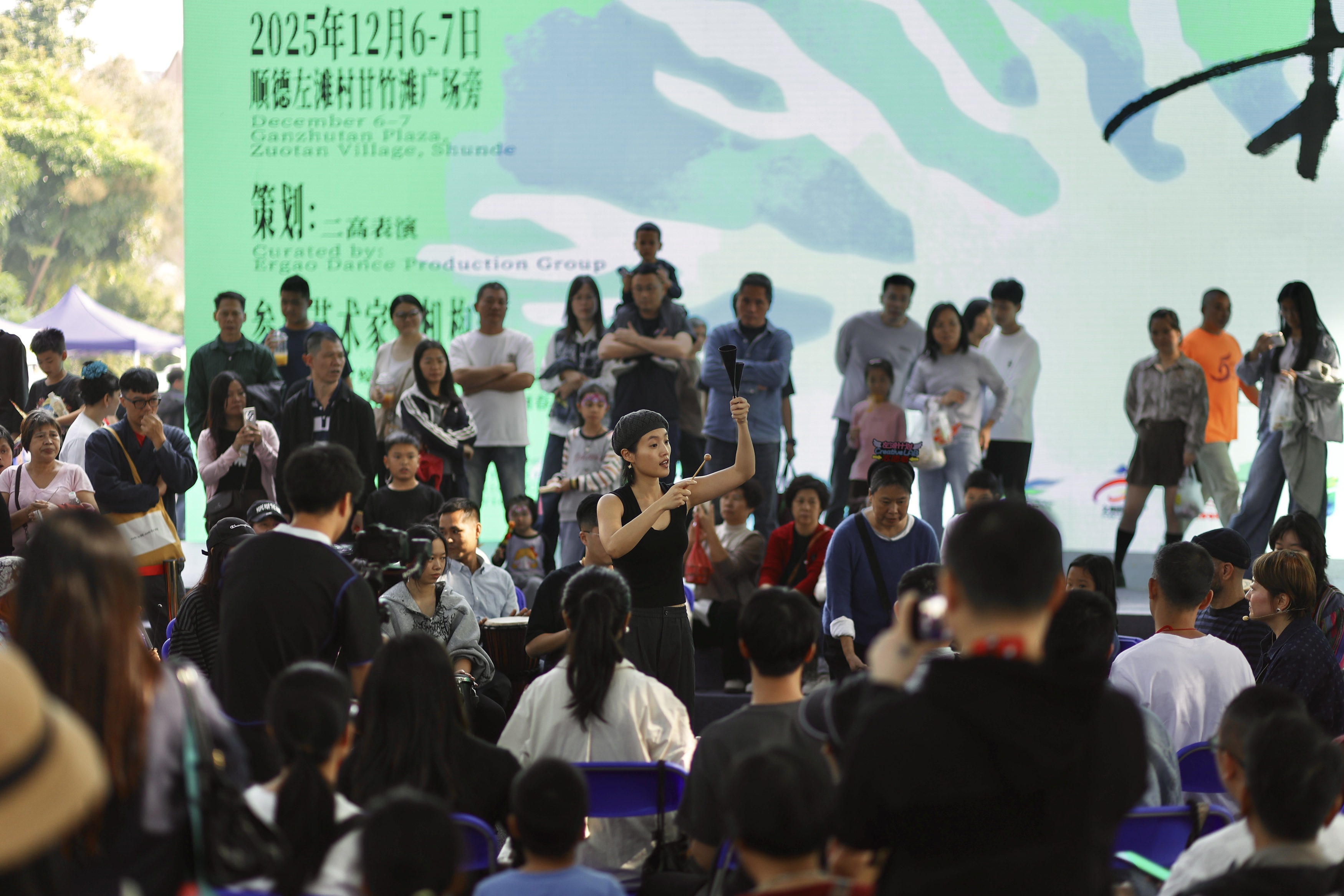
Qiwo He, or Ergao, had already been working with the body for many years across dance, theatre, video and performance. Many of his works are deeply connected to southern China, to his own bodily experience and to the histories and popular cultures of the Pearl River Delta. But in 2024, EDPG closed its physical space in the city and established Southern Dance House in Zuo Tan Village.
What changed when the organisation moved?
Binghuang: The move changed the relationship between the body and the place. Ergao’s practice had long been concerned with bodily experience, but in the village the body is no longer only the subject or material of an artwork. It becomes part of everyday life.
Southern Dance House is interesting precisely because it does not fit neatly into the category of a contemporary dance venue. It can be a dance hall, a martial arts hall, a village public space and a community laboratory at the same time.
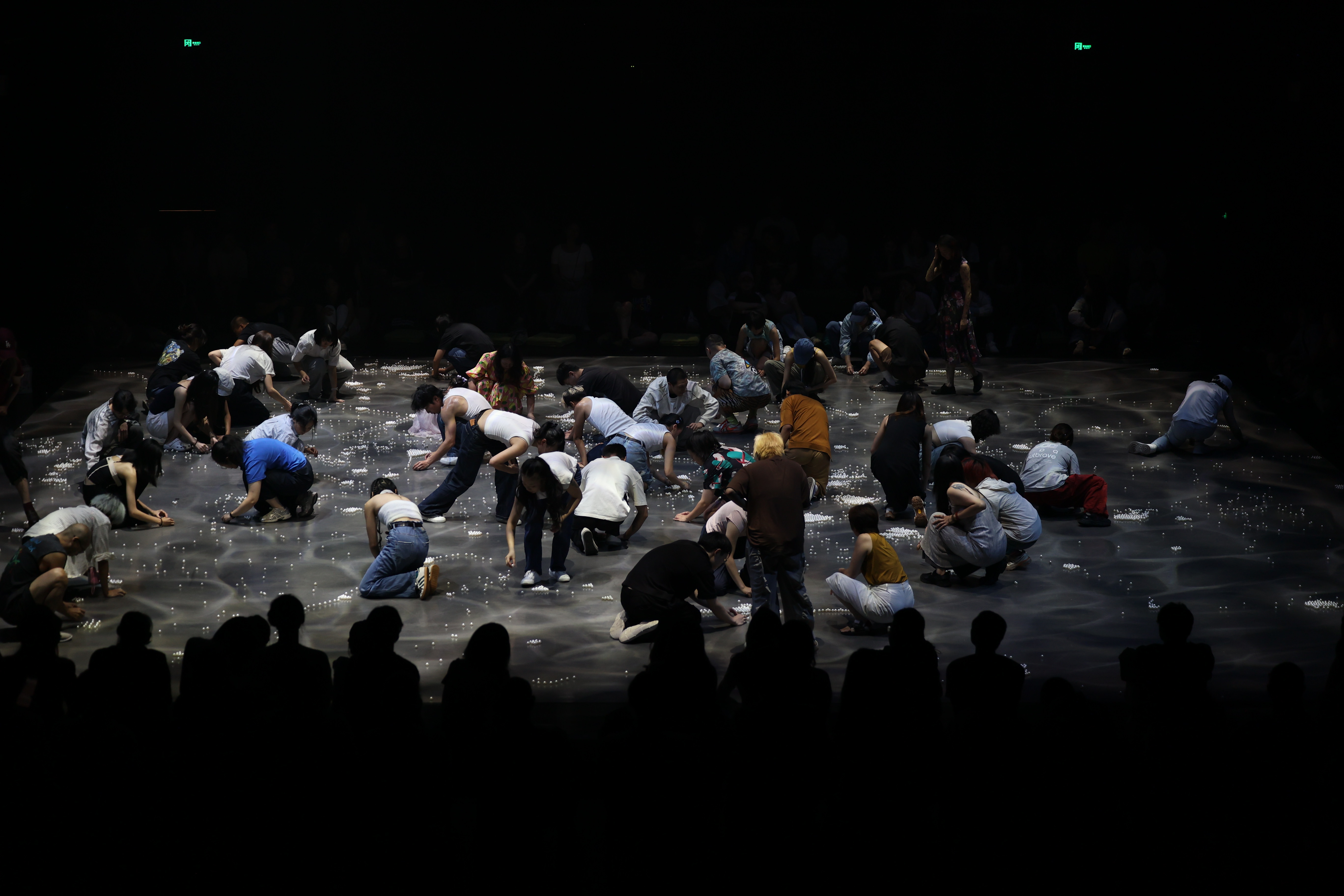
Works such as Hide-and-Seek demonstrate this shift. Blind massage and dance become ways of creating tactile encounters and forms of bodily dialogue. The practice is less about bringing a finished artwork into a community and more about allowing the artistic process to become entangled with everyday life.
Xiaowen: That seems connected to Ergao’s idea of ‘community as a working method’. It also complicates the usual distinction between artist and community, or between art space and public space.
Binghuang: I think it challenges the idea that an artist arrives somewhere as an outsider, observes a community and then produces a work about it. Here, the process is much more embedded. The artist is also dwelling in the place, participating in its rhythms and allowing those relationships to change the work.
Xiaowen: The third example, Baopu·FELT, brings another kind of complexity. It is based in Kaili, in Qiandongnan Miao and Dong Autonomous Prefecture, where different languages, oral traditions, ritual practices, textile techniques, village structures, tourism and contemporary life overlap.
You have also worked closely with Baopu·FELT, including curating Where We Still Dream of Lost Vocabularies. What does ‘place’ mean in this context?
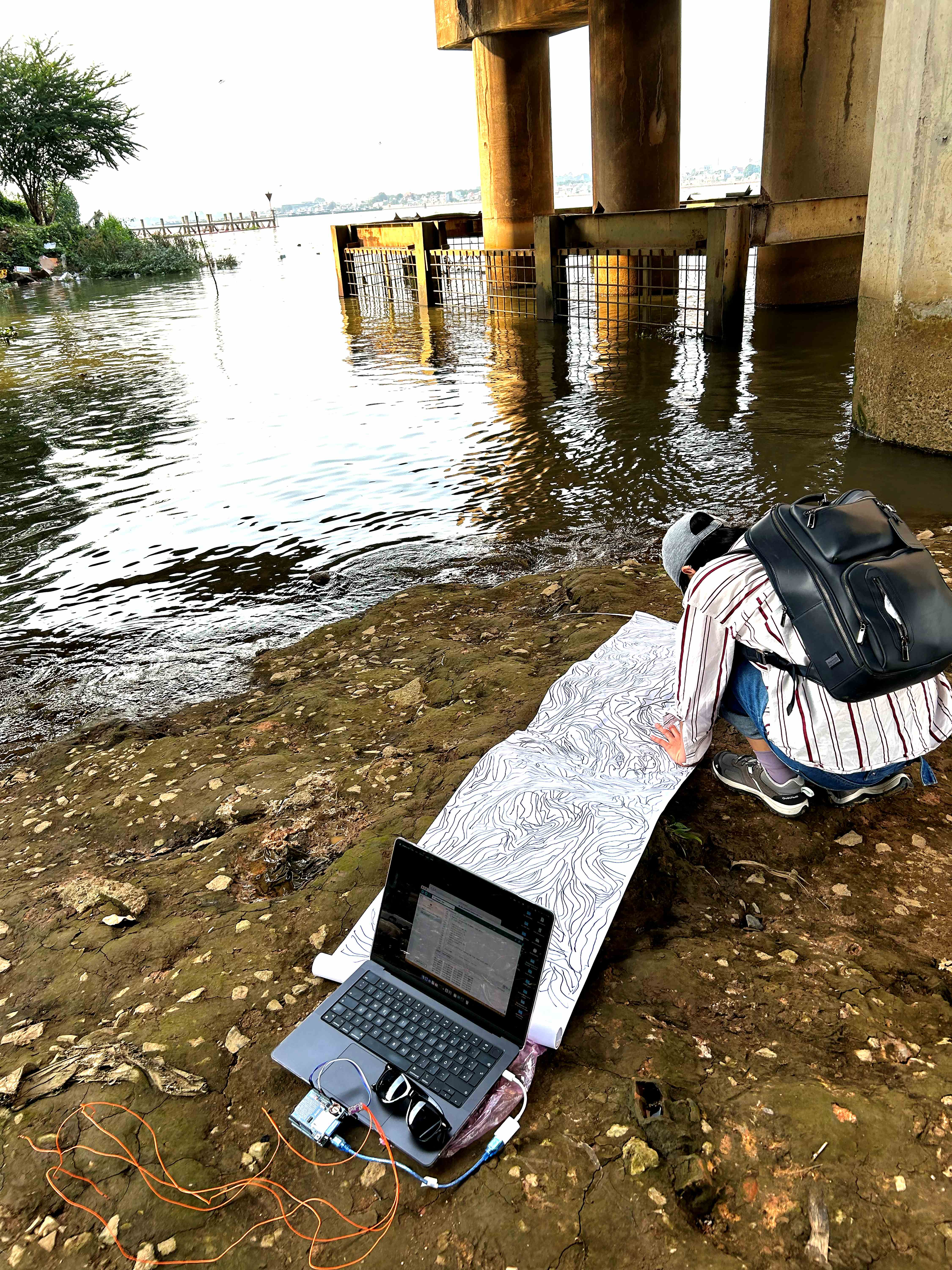
Binghuang: Here, place is inseparable from knowledge. You cannot simply understand Kaili through geography. You encounter multiple systems of language, memory, ritual, craft and social organisation, alongside the pressures of tourism, cultural heritage and contemporary development.
Baopu·FELT was founded in 2024, and after its first year it began to organise its work through thematic seasons. The Shape of Language, for example, looked at writing systems, oral traditions and language practices in Southwest China.
I think the important question is not simply how an art organisation can represent local knowledge. It is how it can work without immediately reducing that knowledge to something that can be collected, explained, exhibited or consumed.
Xiaowen: That is particularly important because the practitioners themselves occupy a particular position: they are predominantly Han Chinese practitioners working within a region shaped by diverse ethnic minority communities. So there is an unavoidable question of position: who is looking, who is interpreting, and who has the authority to speak?
Binghuang: Yes, and I think this is where slowness becomes important. The organisation cannot resolve these questions through a single exhibition. Its response has been to develop longer-term forms of engagement: residencies, fieldwork, workshops, conversations, podcasts, publishing and peer learning.
The aim is not necessarily to produce a definitive interpretation of local knowledge, but to create conditions in which complexity can remain visible.
Xiaowen: That brings us to AMPL, which introduces another kind of place: the county town.
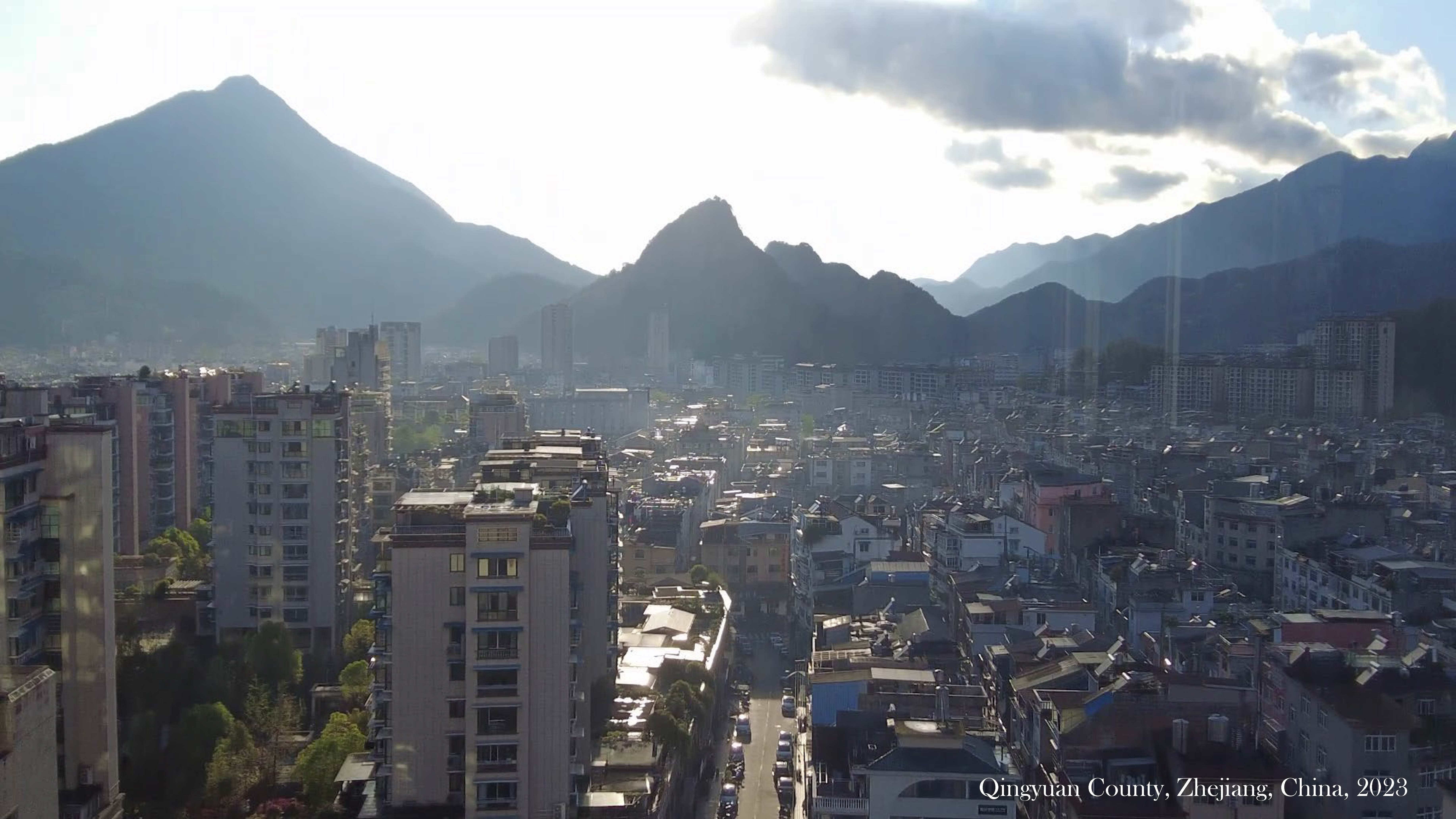
Qingyuan is neither a rural village nor a smaller version of a major metropolis. A county town functions as a local centre for surrounding villages and townships, concentrating schools, hospitals, administration, commerce and everyday public life. What does it mean to establish a contemporary art museum in such a place?
Binghuang: AMPL had to begin with a very basic question: why would local people enter a contemporary art museum?
When the museum opened in 2023, Dingyu Hu encountered visitors who looked at installation works and asked why the museum was exhibiting ‘junk’. Rather than treating that reaction simply as a problem of audience education, AMPL began to reconsider what kind of relationship a museum could build with its local public.
The Kaleido O project in 2024 is a good example. It brought together residency, teaching, artistic production and the participation of local high school students within the exhibition-making process. More than 500 Qingyuan residents eventually became involved.
Xiaowen: And in The Gifts, young people also became organisers and writers. So education is not being treated simply as an outreach department attached to an exhibition programme.
Binghuang: Exactly. It becomes part of how the institution produces knowledge and publicness.
This is what I find interesting about AMPL. The museum is testing how contemporary art can enter county life without assuming that the county needs to become more like a metropolitan art centre. Instead, the institution has to discover what contemporary art can mean within the particular rhythms and social structures of county life.
Xiaowen: Listening across these four cases, I wonder whether ‘site-responsive practice’ is actually too easy a term. We often use it to describe art organisations working outside major centres, but it can imply that the organisation simply responds to a place that already exists.
What I see here is something more reciprocal. The place changes the organisation, but the organisation also changes what the place can become as a cultural space.
Binghuang: I agree. And this is why I would be cautious about describing these organisations simply as ‘alternative’ or ‘peripheral’. Those terms still assume that the metropolitan institution is the centre against which everything else is measured.
What these organisations demonstrate is that cultural infrastructure can emerge differently. The grocery shop, the village dance house, the research laboratory and the county museum are not failed versions of a conventional art institution. They are producing their own forms.
Xiaowen: So perhaps the more interesting question is not how art organisations outside metropolitan centres can become more institutionalised, but how the conditions of these places ask us to rethink what an art organisation can be in the first place.
Binghuang: I think this also changes how we understand artistic methods. A method does not simply arrive fully formed and then get applied to a place. It is continuously adjusted through encounters with people, infrastructures, histories and everyday situations.
Xiaowen: Which brings us back to the idea of the ‘turn’. Across these four organisations, the turns are very different: a grocery shop becoming a space for children; a dance organisation moving from the city to a village; an art lab developing ways of working with complex local knowledge; and a museum learning how to become part of county public life.
But none of these turns seems to have been determined in advance.
Binghuang: No. They emerged through practice. That may be the most important connection between the four organisations. Their methods are not simply responses to place; they are forms of ongoing judgement. They observe, adjust, try again and sometimes change direction.
For me, that is where the value of looking beyond established cultural centres lies. Not because these places offer an alternative model that can simply be exported elsewhere, but because they reveal how artistic practice is constantly being reinvented through the conditions in which it takes place.
Xiaowen: And perhaps that is also what we wanted Off Centre: Elsewhere in Practice to open up: not another map of where contemporary art happens, but a closer look at how practices are made possible by particular places, relationships and forms of collective life.
Binghuang: Moving from island to village, from Southwest China to a mountain county town, we are also moving away from the assumption that there is one centre from which contemporary art radiates. There are many places where cultural life is being made, negotiated and sustained. The question is how closely we are willing to look at them.